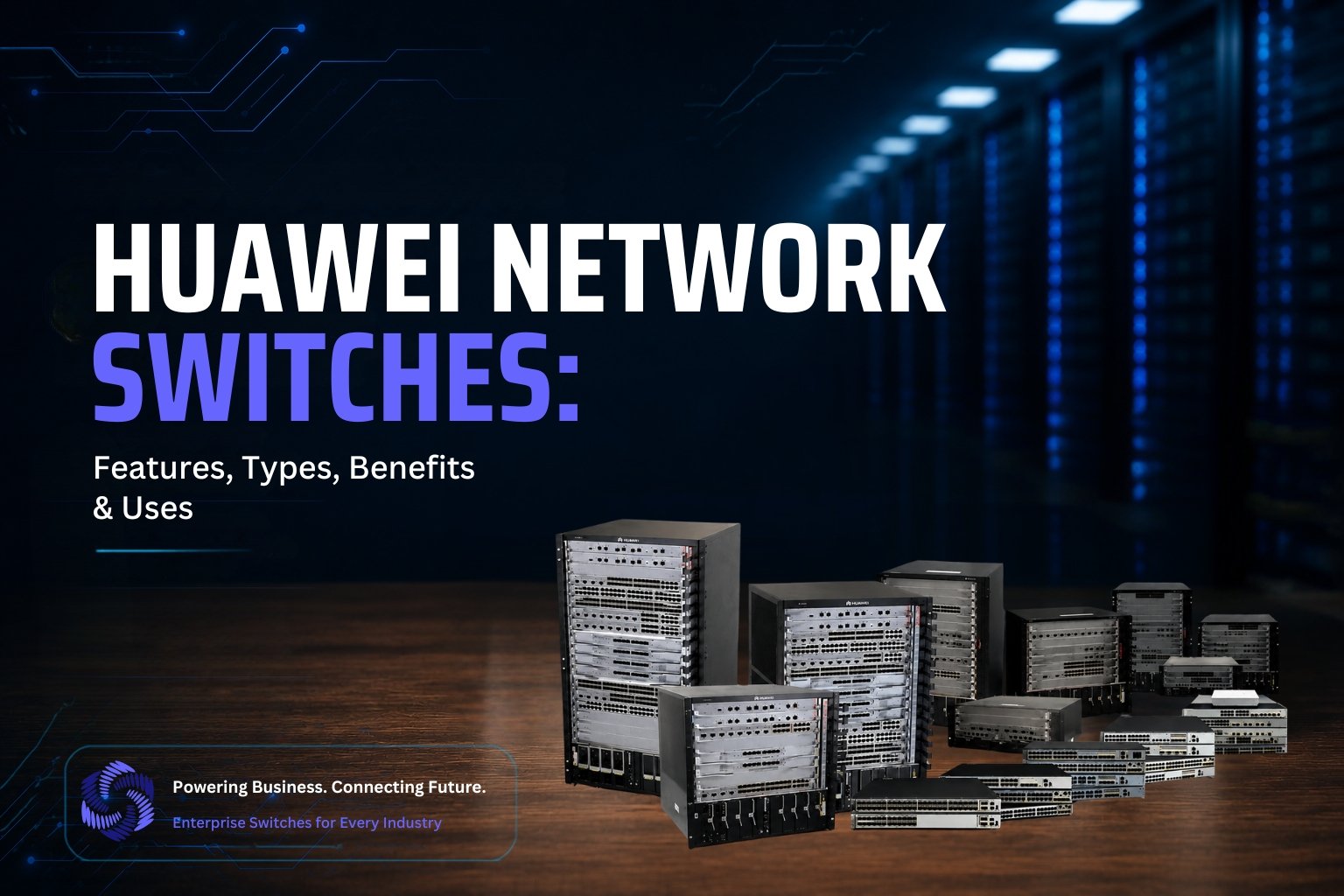
Discover Huawei network switches for enterprise, campus, and data center networks. Compare features, switch types, PoE, security, and choose the right model.
Introduction
In a modern business network, the switch is not just another box in the rack. It is the quiet engine that keeps everything moving. From employee laptops and IP phones to servers, access points, and security cameras, every device depends on fast and stable switching to communicate without bottlenecks. That is exactly where Huawei network switches come into the picture.
Huawei has built a strong reputation in enterprise networking by offering switches that combine performance, reliability, scalability, and intelligent management. Whether you are running a small office, a campus environment, or a large-scale data center, Huawei provides switch options designed to keep traffic flowing efficiently while supporting business growth.
What Are Huawei Network Switches?
Huawei network switches are networking devices that connect computers, servers, phones, access points, and other equipment within a local network. They help direct traffic efficiently so data reaches the right destination without unnecessary delays.
Understanding Enterprise Network Switches
Enterprise network switches are built for business environments where speed, reliability, and control matter. Unlike basic home devices, they can handle heavier traffic, support more users, and offer advanced tools for segmentation, security, and performance management.
Why Is Huawei a Trusted Networking Brand?
Huawei has built a strong presence in networking by offering a wide range of switching solutions for different business scenarios. Many organizations value Huawei because its networking portfolio is known for combining performance, flexibility, and management capabilities into a single ecosystem.
Businesses often consider Huawei because it provides:
- A broad product range
- Support for enterprise and data center environments
- Advanced network features
- Centralized administration options
- Scalable infrastructure for growing networks
For organizations that need more than basic connectivity, Huawei can be an attractive option.
Key Features of Huawei Network Switches
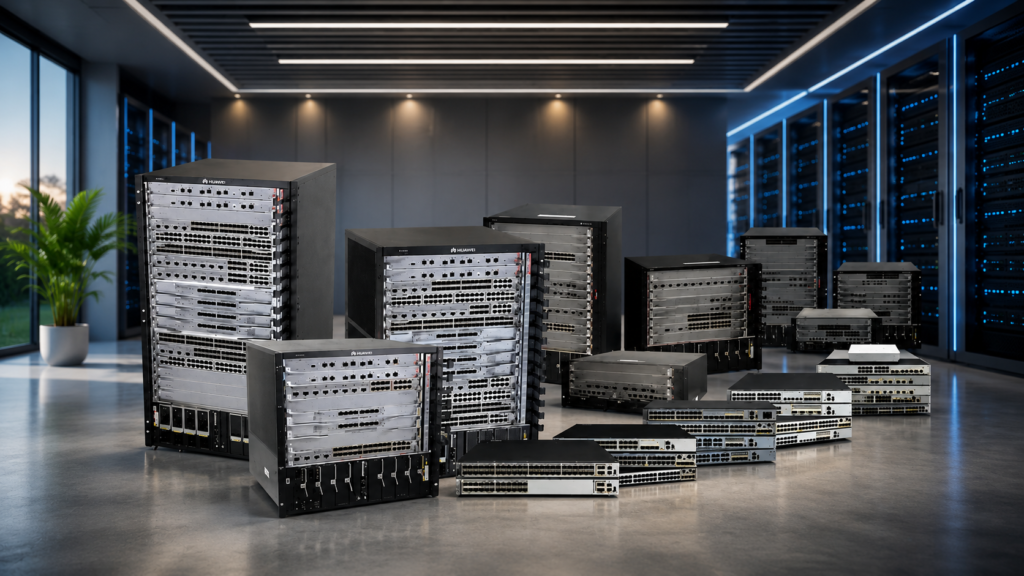
Huawei network switches come with features that make them suitable for professional environments. These include high-speed connectivity, advanced routing support, intelligent management tools, and design elements that help improve long-term reliability.
High-Speed Ethernet Connectivity
Huawei switches are designed to move large amounts of data efficiently across connected devices. This makes them a strong fit for offices, campuses, and data-heavy environments where fast and stable communication is essential.
Advanced Layer 2 and Layer 3 Networking
These switches support both Layer 2 switching and Layer 3 routing capabilities, depending on the model. That means they can manage local traffic inside a network while also handling more complex routing tasks between different network segments.
Intelligent Network Management
Huawei switches often include smart management options that make administration easier for IT teams. These tools help monitor traffic, simplify configuration, and improve visibility across the network so issues can be identified and resolved faster.
AI-Driven Zero-Touch Configuration is another major advantage in modern enterprise networking. With platforms like CogniKor AI Automation, engineers can generate and validate switch configurations based on requirements such as VLANs, IP addressing, routing, security policies, and interface details. This reduces manual work, lowers configuration errors, and speeds up deployment across vendors like Cisco, Aruba, Huawei, Juniper, and Fortinet.
Strong Network Security
Security is an important part of any enterprise network, and Huawei switches include features that help protect data and connected devices. These may support access control, traffic filtering, and network segmentation, which can reduce the risk of unauthorized access.
Power over Ethernet (PoE) Capabilities
Some Huawei switches support Power over Ethernet, or PoE, which allows both data and power to travel through a single cable. This is especially useful for devices such as IP phones, wireless access points, and security cameras, since it reduces cable clutter and installation effort.
Energy-Efficient Hardware Design
Many Huawei switches are designed with energy efficiency in mind, which can help lower operational power use. This matters in large networks where equipment runs continuously, and energy savings can have a meaningful impact over time.
High Availability and Redundancy
Huawei network switches can support redundancy features that improve uptime and reduce the impact of failures. In business environments, this kind of reliability is important because downtime can interrupt communication, productivity, and customer service.
Types of Huawei Network Switches
Huawei offers different types of switches to match different parts of a network. Each type plays a specific role, from connecting end users to supporting core network traffic and data center workloads.
Access Switches
Access switches are used at the edge of the network to connect end devices like desktops, printers, phones, and wireless access points. They are the first point of connection for most users and are essential for everyday office operations.
Aggregation Switches
Aggregation switches collect traffic from multiple access switches and move it toward the core network. They help organize traffic flow, improve efficiency, and create a more structured network design.
Core Switches
Core switches sit at the center of the network and handle large volumes of traffic across major segments. They are built for speed, stability, and resilience, making them important in larger enterprise environments.
Data Center Switches
Data center switches are designed for high-performance environments where servers, storage, and applications need fast, reliable communication. These switches help support heavy workloads, virtualization, and cloud-related traffic demands.
Benefits of Choosing Huawei Network Switches
Organizations choose Huawei switches for several practical reasons, including performance, growth support, and cost value. The right model can help improve network reliability while keeping operations manageable.
Scalable Network Infrastructure
Huawei switches support network growth by allowing businesses to expand without rebuilding their entire infrastructure. This makes them useful for companies planning for more users, more devices, or more demanding applications in the future.
Reliable Performance
Stable switching performance is important for keeping communication smooth across the network. Huawei switches are built to handle business traffic efficiently, which can help reduce slowdowns and keep connected systems responsive.
Cost-Effective Enterprise Networking
For many organizations, Huawei switches offer a balance between features and budget. That makes them attractive for businesses that want enterprise-grade networking without unnecessary complexity or overspending.
Common Applications of Huawei Network Switches
Huawei switches are used in many different environments because networking needs vary from one industry to another. Their flexibility makes them suitable for a wide range of business and institutional settings.
Enterprise Offices
In office environments, Huawei switches help connect employees, printers, phones, and wireless systems. They support day-to-day communication and help keep business operations running efficiently.
Educational Institutions
Schools, colleges, and universities use switches to support classrooms, computer labs, administration, and campus-wide connectivity. A stable network is especially important in education because so many users depend on it at the same time.
Healthcare Facilities
Hospitals and clinics require secure and reliable networks for administrative systems, communication tools, and connected devices. Huawei switches can help support these environments by providing dependable connectivity and network segmentation.
Data Centers and Cloud Environments
Data centers and cloud environments rely on fast switching performance to move traffic between servers, storage systems, and applications. Huawei switches are a strong fit for these situations because they are designed for high-volume, high-demand networks.
How to Choose the Right Huawei Network Switch?
Choosing the right switch depends on your network’s size, traffic needs, and future growth plans. A good choice today should still support your business tomorrow.
Determine Your Network Size
Start by understanding how many users and devices need to connect to the network. A small office may need a simple access switch, while a larger organization may require a more layered switching structure.
Consider Port Requirements
Port count matters because every device needs a connection point. You should also think about port speed, since faster uplinks and device connections can improve overall performance in busy networks.
Evaluate PoE and Uplink Needs
If your network includes access points, phones, or cameras, PoE support may be necessary. Uplink requirements are also important because they affect how traffic moves between switches and higher parts of the network.
Plan for Future Expansion
A smart switch choice should leave room for growth. Planning helps avoid replacing hardware too soon and makes it easier to add users, devices, or new services later.
Why Huawei Network Switches Stand Out from Competitors?
Huawei network switches stand out because they combine a broad feature set with deployment flexibility. For many businesses, that combination is important.
Here is what often makes them attractive:
- Strong portfolio across access, aggregation, core, and data center layers
- Support for modern networking features
- Flexible management and automation options
- PoE availability on supported models
- Scalability for growing organizations
- Good fit for enterprise-grade environments
In a crowded networking market, that kind of versatility matters.
FAQ’s
They are used to connect devices within a network and manage traffic efficiently across offices, campuses, and data centers.
Yes, Huawei offers switch models designed for enterprise environments with performance, security, and scalability in mind.
Some Huawei switches do support PoE, which allows connected devices to receive both power and data through one cable.
You should consider network size, port count, PoE needs, uplink speed, and future expansion requirements.
Yes, Huawei provides data center switch options built for high traffic, low latency, and large-scale infrastructure needs.
Conclusion
Huawei network switches are a practical choice for organizations that need reliable, scalable, and efficient networking infrastructure. Whether the goal is to connect office users, support a campus, or power a data center, these switches offer the features needed to build a strong network foundation. By choosing the right model and planning carefully, businesses can improve performance, simplify management, and prepare for future growth.